
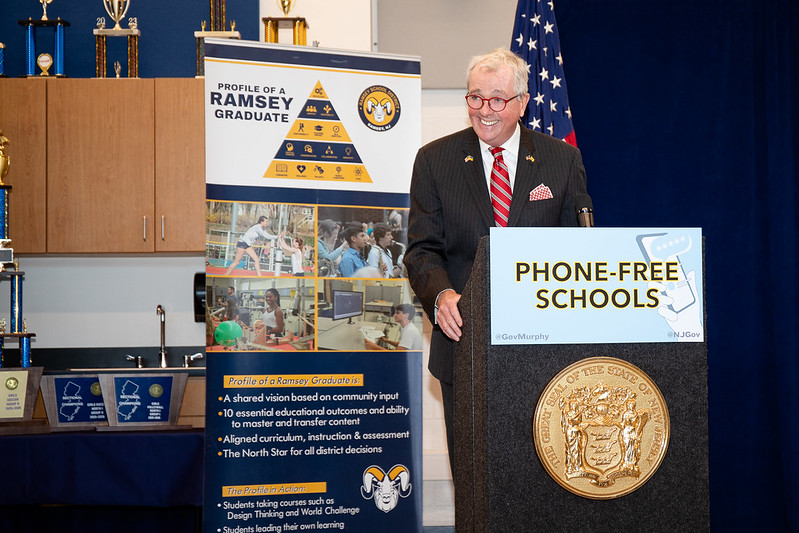
“By removing cell phones from New Jersey schools, we are ensuring our classrooms are a place for learning and engagement…,” stated former governor Phil Murphy just 12 days before leaving office. The new Bell-To-Bell phone policy will be carried out in the 2026-27 school year leaving numerous students enraged and teachers elated. It is believed by many that the removal of cell phones within schools all together will significantly lower anxiety, create less distractions, and cause an increase in obstacles like cyber-bullying. However, having access to phones in class can provide comfort and, overall, create a more peaceful environment.
Today, technology can be found everywhere, from electric cars to doorbells and from robot vacuums to smart speakers like Alexa and Google Home. Technologically powered devices have increased in usage throughout the years, enabling an easier, more convenient life. So, shouldn’t students be exposed to technology more throughout the school day in preparation for the real world?
Overall teachers seem to believe the problem isn’t the phones themselves, but rather the negative effects they have on users. Business teacher Mr. Mugavero provided his insight on this matter, explaining that he feels students can’t relax and handle being in the moment because of technology’s effect on their attention spans. He continued by stating “Devices now have made you so addicted that you can’t put them down. I think you don’t know how to interact socially anymore, you’ve become dependent on this as a resource now that you will ask ChatGPT to solve relationship problems, so I think you’re losing problem solving abilities as well.” When asked to provide what problems he thinks phones cause his response was, “I think it’s causing insecurities and anxiety and it has also caused young people to feel a sense of entitlement”.
On the other hand, having access to your phone at any time throughout the school day can be very comforting and reassuring. If a student isn’t feeling well or an unexpected change throughout the day occurs, they’ll be able to easily get in contact with their parents. The peace in knowing that there are immediate resources in order to get in touch with whomever, can cause a significantly calmer environment.
Many could argue that it’s proven that the withdrawal of phones throughout the day causes an increase in grades. However, the grades in a phone-free classroom only increased about 0.07% according to the Wharton School at UPenn. Likewise, as Mr. Mugavero previously stated, phones cause many problems such as insecurities and anxiety, however, many students will return to their phones after leaving school, at which point they are still able to experience those negative effects, leaving the policy having little to no positive effects.
All in all, the benefit of having a more peaceful and stress-reduced habitat during the school day by having access to phones during class, is far more important than any other irrelevant benefits not having them could provide, as school can already be a nerve-racking tense place for many students. There are many different opinions on whether or not the cell phone bell-to-bell policy should be enforced within schools, but it is evident that both sides of this debate have strong opinions on this matter. At Knolls, it seems likely that next year a revised phone policy may require students to surrender their phones in locked pouches or storage bins. Not only will students not have access to phones within classes, they also will be restricted from use at lunch and in the hallways. From the first bell to the last bell, students will remain phone free.
Photo courtesy of https://newjerseymonitor.com/2026/01/08/new-jersey-banning-cellphones-classroom/