Bite, yell, run. Right? That’s what women are told to do if they are in danger. But is that it–is it enough to save ourselves? Are there women out there who don’t even know those steps alone? All of these questions about women’s education on safety make it glaringly clear that schools should hold the responsibility of providing self-defense classes, because every student deserves the knowledge and confidence to protect themselves.
840 million women (roughly 1 in 3) worldwide aged 15 or older have experienced physical or sexual (non-partner/partner) violence in their lifetime. That being said, self-defense against this violence should be taught and learned in schools, not dismissed.
Implementing self-defense classes or lessons into school systems specifically for female students would likely come with challenges. Some people may argue that these classes are “too violent” or inappropriate for a school setting, or that they could create unnecessary fear among students. However, in a world where women continue to face systemic discrimination and unequal treatment, providing these skills can be seen as a proactive and an empowering measure rather than a harmful one.
As long as societal norms have existed, women have been pushed to be more “lady like”, “more feminine”, and be seen as the “submissive” gender. Fortunately, we have progressed as a society today, but even though we like to think we have completely moved on from these norms, they have not gone extinct nor has the prejudice against women. If schools refuse to offer opportunities that directly address safety concerns more commonly experienced by girls, that decision could itself be viewed as a form of inequality.
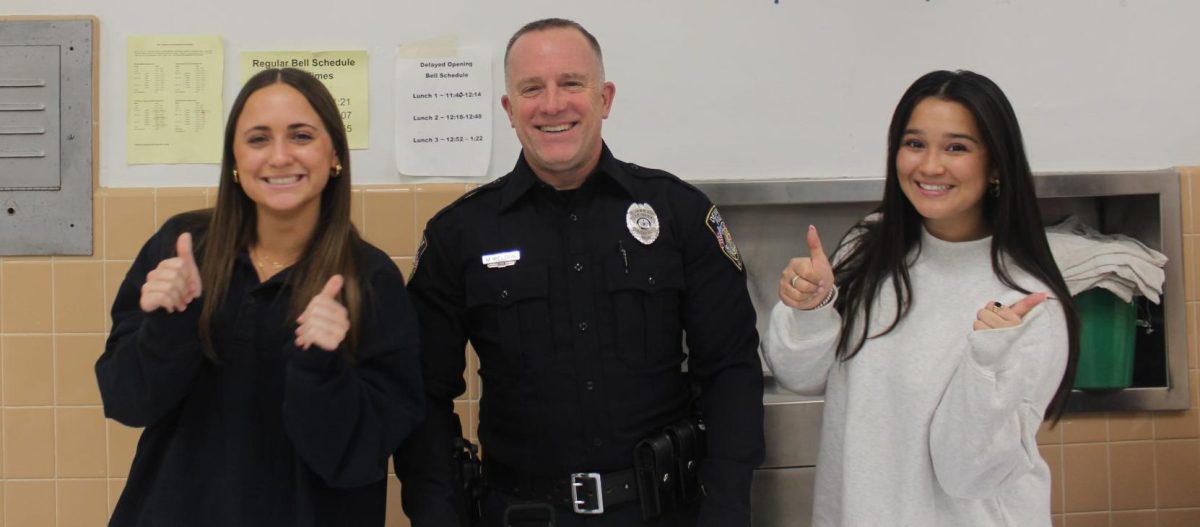
Agreeably, Officer Weldon of the Denville Police Department, and girl dad of three, advises to “Fight dirty and fight to win. As a woman, you do whatever you have to do to survive.” He also mentions that one of the most vital tips when it comes to being in an unsafe situation is to “be a proud, strong, confident woman… image is everything.”
As helpful as this sounds, not every woman is aware of this. The results of a random poll conducted on several female student drivers at Morris Knolls High school support a lack of basic safety awareness. When students were asked “what are the first things you do when you get into your car in a parking lot late at night?” answers varied significantly. A small number of the students answered correctly with “check my backseat” or “lock my car doors,” but a majority of them answered with “turn on my music,” “check the AC,” or just simply “drive away”.
It’s concerning that fellow female students are not knowledgeable about what to do in unsafe situations. As someone who grew up with a mom who made it my life’s duty to be over cautious and constantly aware of my surroundings, it is painful to know that some people were not as fortunate.
When a woman, or anyone else for that matter, is in a dangerous situation it is always important to resist. With resistance, comes the bravery to defend and protect yourself. In an Idaho State University blog about “The Importance of Self Defense for women” it is clearly articulated that research proves “those who resisted physically and verbally against their attackers significantly reduced the probability of serious injury.”
So why shouldn’t students be given the opportunity to learn about skills that may not just protect students from danger, but save their lives.
Students whether female or male come to school to learn and expand their knowledge. Schools today have strayed from traditional ways of teaching that simply focused on core subjects. All over America classes specific to Finance, Business, Culinary, etc that are not just Math or English have grown in popularity. These are classes that focus on topics for the purpose of being prepared for real- world matters, just like a self-defense class would.
Ideally, an elective class on Self-defense would run at Knolls. Although there is no particular strategy of how this classes would be taught or scheduled yet, there are several possible ways of going about implementing one. Another police officer from the Denville Police Department, Officer Underwood, gave his thoughts about the idea. He is in favor of self defense classes and advises that if this type of class were offered they would “have to be done in repetition,” meaning students should “take them several times so [they] remember [the skills] just like police officers do their own classes multiple times a week… Self defense takes practice, it’s a slow progression.”
Underwood also mentions that offering this type of a class could be tough because of costs since it would most likely require a trained professional instructor from a nearby martial art studio. However, he thinks that if the companies were to be made aware about the class’s circumstances, a possible “student rate” could be established. This points to the fact that it might be more likely to be offered if Knolls’ starts by organizing an scheduled after school course on self-defense. Maybe, just maybe this could lead to a full blown elective course.
Similar to Officer Weldon, Underwood agrees that staying strong and being alert of your surroundings is key to staying safe when alone. Especially for students who plan to go to college very soon, “never travel alone” he emphasized.
Overall, empowerment begins with knowledge, practice, preparation, and support. Every woman should have the right and responsibility to learn these essential skills. Life is precious, and survival is not a choice; it’s a necessity.