
Every two years, people of all ages and nationalities gather around their screens to watch one of the globe’s most anticipated occasions: The Olympics. This February, the Winter Olympics were brought to Milan, Italy, where athletes in skating, skiing, and even many uncommon sports represented their countries in hopes of winning a gold medal.
The opening ceremony kicked off the Olympic season on February 6th, which featured performances from the queen of winter herself, Mariah Carey, and notorious Italian singer Andrea Bocelli. The athletes representing each country walked out to spectators from dozens of different countries, and with the lighting of the Olympic Cauldrons, the 2026 Winter Olympics were officially underway.
Among the sixteen sports offered at the Winter Olympics, ice hockey and figure skating have historically been some of the most popular to watch over the years. This year, Team America set a new national record by taking home 12 gold medals, a tribute to the grit and commitment shown by its athletes, a quarter of them coming from these popular on-ice sports alone.
Ice Hockey

This year, The United States took home gold in both women’s and men’s hockey. It was the first time both teams have won in the same Olympics. Senior Madison Sipple, who enjoys playing hockey with her family, said “It was pretty incredible that both the men’s and women’s teams won, since we haven’t won since 1980,” which makes the wins even more astounding. What’s even crazier is that both teams won in their respective final matches in overtime. Following their time in Milan, a few members of the hockey teams appeared on the Jimmy Fallon Show as well as Saturday Night Live to celebrate their remarkable accomplishments.
Figure Skating
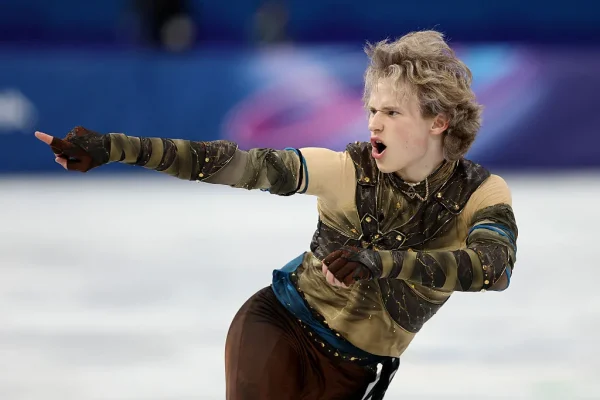
Another sport that has truly captivated spectators watching along the ice is figure skating. Going into this year’s games, young prospect Ilia Malinin was the one to watch. He nicknamed himself the “Quad God” due to him being the only skater to land a quad axel in competition. Malinin represented The United States and competed several times during his time at the 2026 Winter Olympics, earning him the overall 8th place in Milan for men’s individual figure skating.
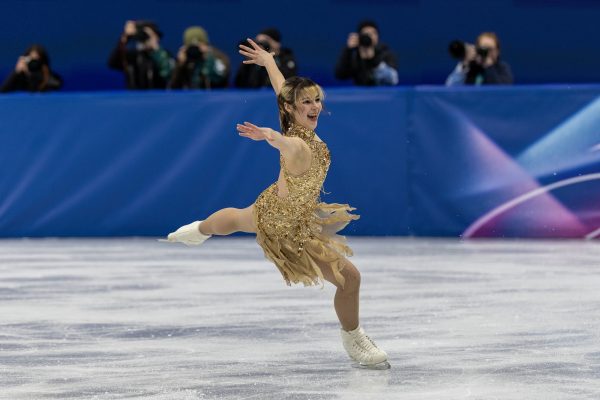
Fellow American skater Alysa Liu also competed beautifully in the women’s individual skate. She has competed in figure skating since she was young, but she retired at the age of sixteen due to the stress and hardships the constant competition brought. Figure skating fan and Morris Knolls student Brielle Malone shared, “I really appreciated how she did that competition for herself and not because of any pressure. I think there’s a lot of sport pressure that goes on where not a lot of people enjoy the sport they do, but Alysa Liu did the Olympics on her own terms and rules. I hope this opens up more doors for athletes to be themselves and do what they want on their own time.” Now, at the age of 21, Liu was able to let go of the stress she used to feel when competing, and brought pure happiness to the ice. Though she returned to figure skating because she enjoyed it, the energy and precision she brought to Milan earned her the gold medal.
While there are a number of sports that are familiar to US audiences, there are a great number of events that many people are not familiar with. Some of the most exhilarating sports that the Winter Olympics has to offer are very under-appreciated, but the more one understands the sport, the more one can enjoy the games on a whole new level
Luge
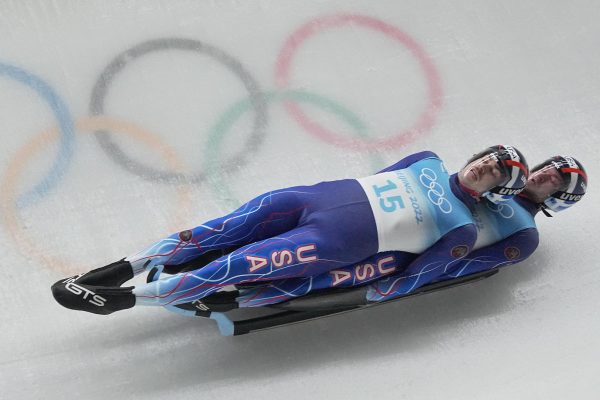
How it works: Athletes competing in luge must be comfortable with the feeling of being both still and accelerated, because while the competitors make carefully calculated movements down the ice, they are also reaching dangerous speeds. In single’s luge, the Olympian begins by sitting on the luge (a type of sled that is specially designed for this sport) and using handles to propel themselves across the ice. After the launch, the contestant picks up speed with help from their spiked and gloved hands, and then they lie down and zoom across the ice. With swift, specific movements, athletes turn and curve down the track at speeds that can get up to 90 miles per hour. A wrong move of the shoulder or a twitch of the knee can slow down the luge, so it is important for moments to remain calculated throughout the race. In double’s luge, contestants are still aiming to have the fastest time, but two contestants are competing at the same time in the same sled. The athlete on top is the eyes of the operation, and the two must work in sync to avoid crashing and reach the finish line as fast as possible.
Spectators generally agree that luge seems like a fun and exhilarating feat of athleticism. Junior Lexi Fallon remarked, “It seems like a cool sport and I would totally get into it if I could,” proving that luge makes all who watch want to slide across the ice as fast as they can.
Biathlon
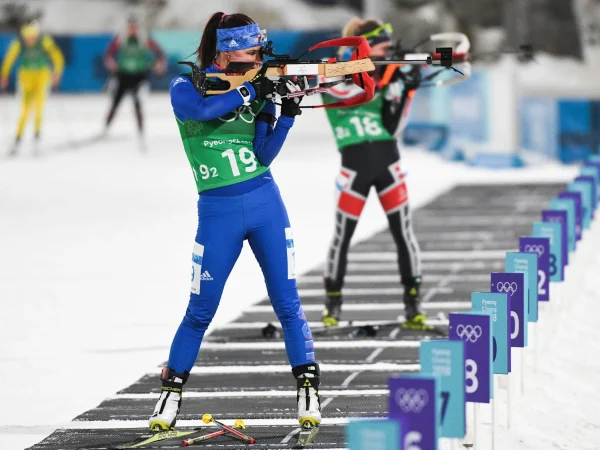
How it works: This sport consists of teams racing through the winter slopes, where both speed and stamina are tested. The race is a mix of skiing a formidable distance and shooting at faraway targets. Athletes generally start skiing across the snow until they stop at the shooting ranges located throughout the course. At each shooting range, competitors have five shots and five targets, and missing any of the shots may result in a one-minute penalty, or they may have to complete a “penalty loop” around another course. Some forms of the race consist of relays, where one person’s finish means that a teammate can officially begin their race. After taking into account any penalties that have been earned and the amount of time it takes each athlete to ski the required distance, a winning team is crowned.
Student Siya Patel recalled watching the sport during this year’s Olympics, and remarked, “Biathlon looks pretty cool and it was really exciting to watch.” Though biathlon is not very well known, those who watch it find it thrilling and a great feat of athleticism.
Curling
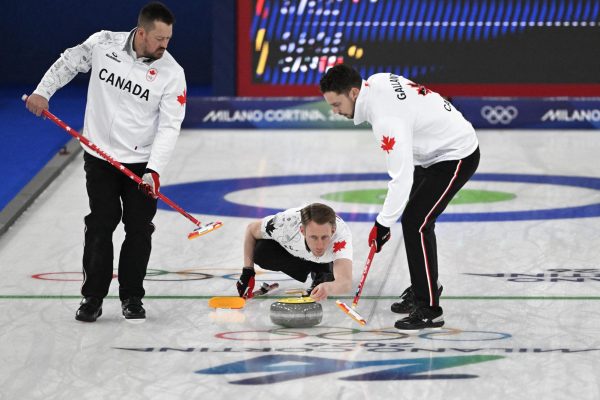
How it works: Depending on the round played, teams of two or four players compete to earn more points than the opposing team. In teams of two, one athlete pushes the stone, which is the heavy object used to score points, toward the target, while their teammate “sweeps” with a broomlike instrument across the ice to get the stone to the intended area. In teams of four, three people take turns pushing and sweeping for the stone as the remaining teammate, called the skip, makes observations and determines what the best strategy would be. The goal is to get your stone closer to the middle of the target than the other team, and after a number of rounds, whoever has the most points total wins. Though many are convinced this is an easy sport, this activity relies on strategy and compatibility in order to win.
While curling seems like a chill sport (with Knolls student Grace Kelleher even saying it is the most “uninteresting sport in the Olympics”), the ice got heated when a member of Team Canada gave his stone a push with his finger after releasing the handle. This action was caught by members of the other country competing, Team Sweden, which sparked arguments between the opponents. In the end, some of Canada’s stones that were “double-touched” were disqualified from the round.
The Closing Ceremony concluded the 2026 Winter Olympics on February 22nd as all of the athletes gathered to commemorate the truly momentous games that they competed in this year. In front of the Italian team stood IOC (International Olympic Committee) President Kirsty Coventry, who addressed everyone who made the Olympics possible. She thanked the competitors for inspiring a new generation of athletes to be more spirited and friendly when facing challenges.
Though it may not be possible for everyone with big dreams to make it to the Olympics, this year’s games inspired so many people, athlete or otherwise, to continue believing in themselves and shoot for the stars.