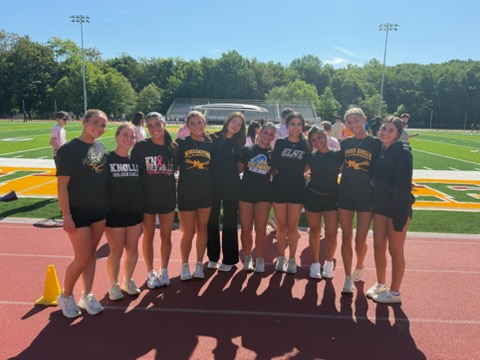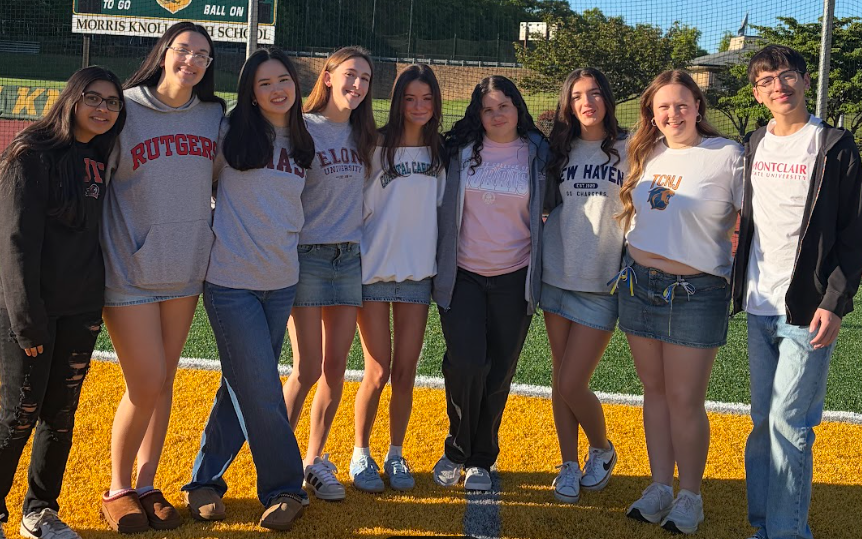
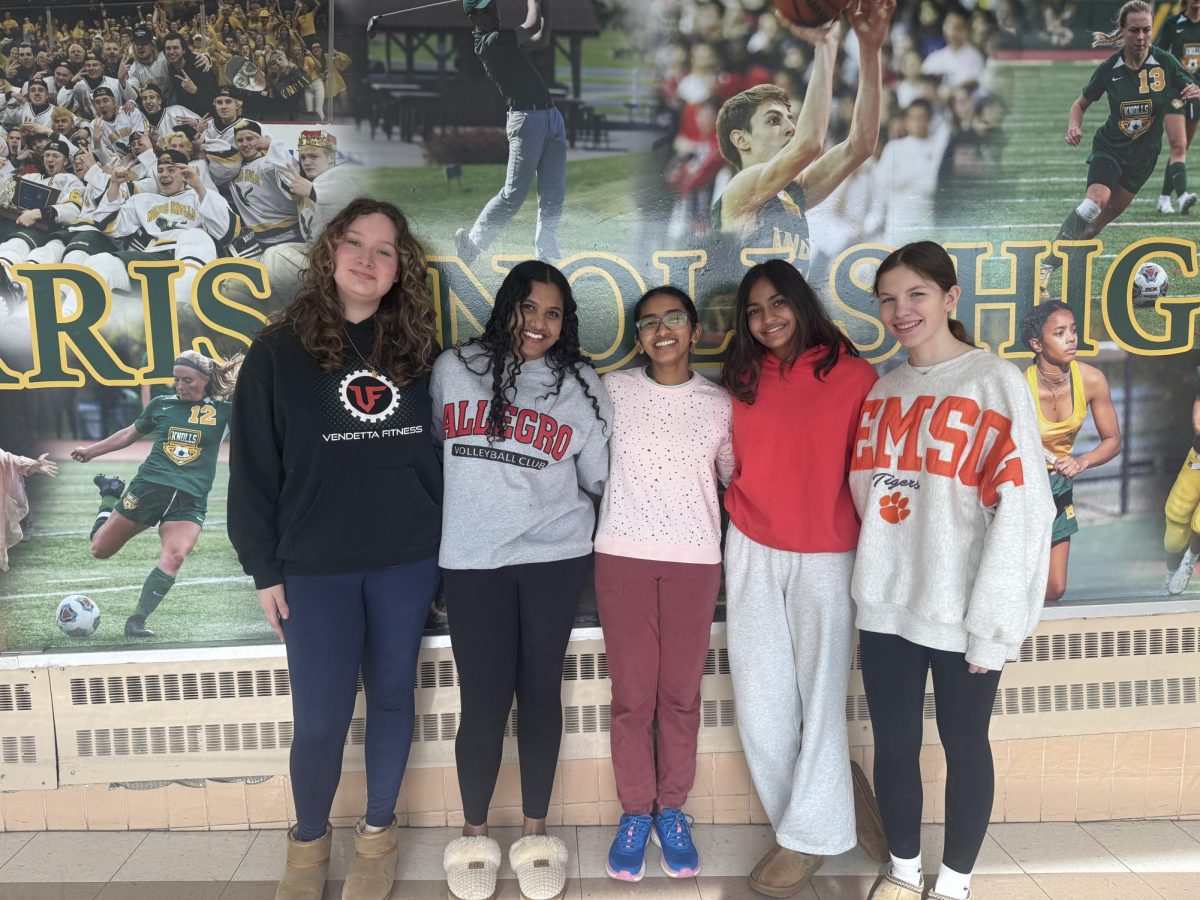
This past month, a group of determined MK students came together to compete in a national STEM competition, Samsung Solve For Tomorrow. Advised by chemistry teacher Ms. Nancy Chiang, sophomores Eesha Vanamala, Alyson Cali, Anika Jubair, Vera Bachu, Nala Patel, Charley LiCalsi, and Skylar Sayles advanced to the semifinals of the competition, placing among the top 100 schools and earning Morris Knolls a $10,000 prize package.
Ms. Chiang served as the students’ advisor, supporting them through the logistics of the process. She spoke of the team in high regard when asked about their success. “The team is made up of seven outstanding young women who are highly motivated, academically strong, and share a passion for science, math, and technology,” she remarked, adding how their solid STEM foundation aided them in the collaborative process.
As part of the competition prompt, students had to create a project plan related to advancing accessibility through STEM. The project itself was an innovative idea formulated by the students proposing a technological FootGuard designed to aid diabetic patients in tracking their health. “With edge machine learning and sensors, our device will help millions,” explained Anika Jubair.
Eesha Vanamala was responsible for bringing the group together, pitching her idea, and dividing the process of executing the plan between each member. When asked how she came up with the idea of partnering with others to participate in the competition, Vanamala responded, “I found out about it through my friend. I’m really interested in biology, and I do a lot of contests involving biology in general.” As for the development of the design, she further described how, “After we decided on health, we picked diabetes, as some of us knew family members who had it. I then focused on research in diabetes and preventing complications.”
What started as an idea bloomed into something far greater. The proposal of the FootGuard has the potential to compete for $100,000 and aims to become a Samsung Solve For Tomorrow finalist. Prize money has been donated to building science labs in the past, and many involved with the competition express hope to raise more money for the science wing and other science-related facilities at Morris Knolls.
“This is a significant achievement for Morris Knolls and our STEM programs,” Chiang added. “Most importantly, it demonstrates the remarkable potential our students have when they collaborate, innovate, and work together toward a common goal.”