Evaluating a “To what extent” question veered off from its traditional purpose at the International Baccalaureate Extended Essay fair last month. As per the IB curriculum, junior students at Knolls were tasked with researching a chosen question or topic for a dissertation-style paper, the subject itself representing their passion. EE coordinator Mrs. Vertucci conceptualized the EE fair, using it as a tool to help students share their ideas.
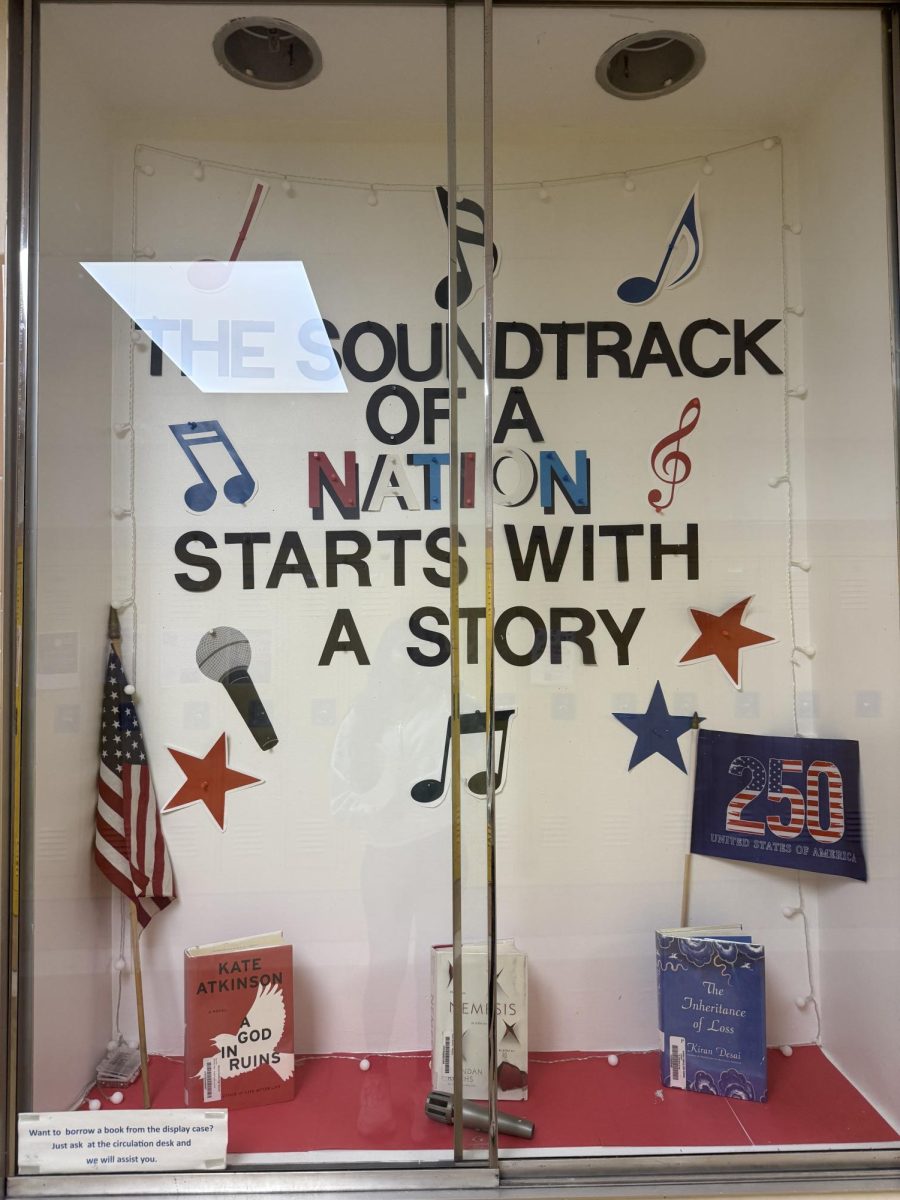
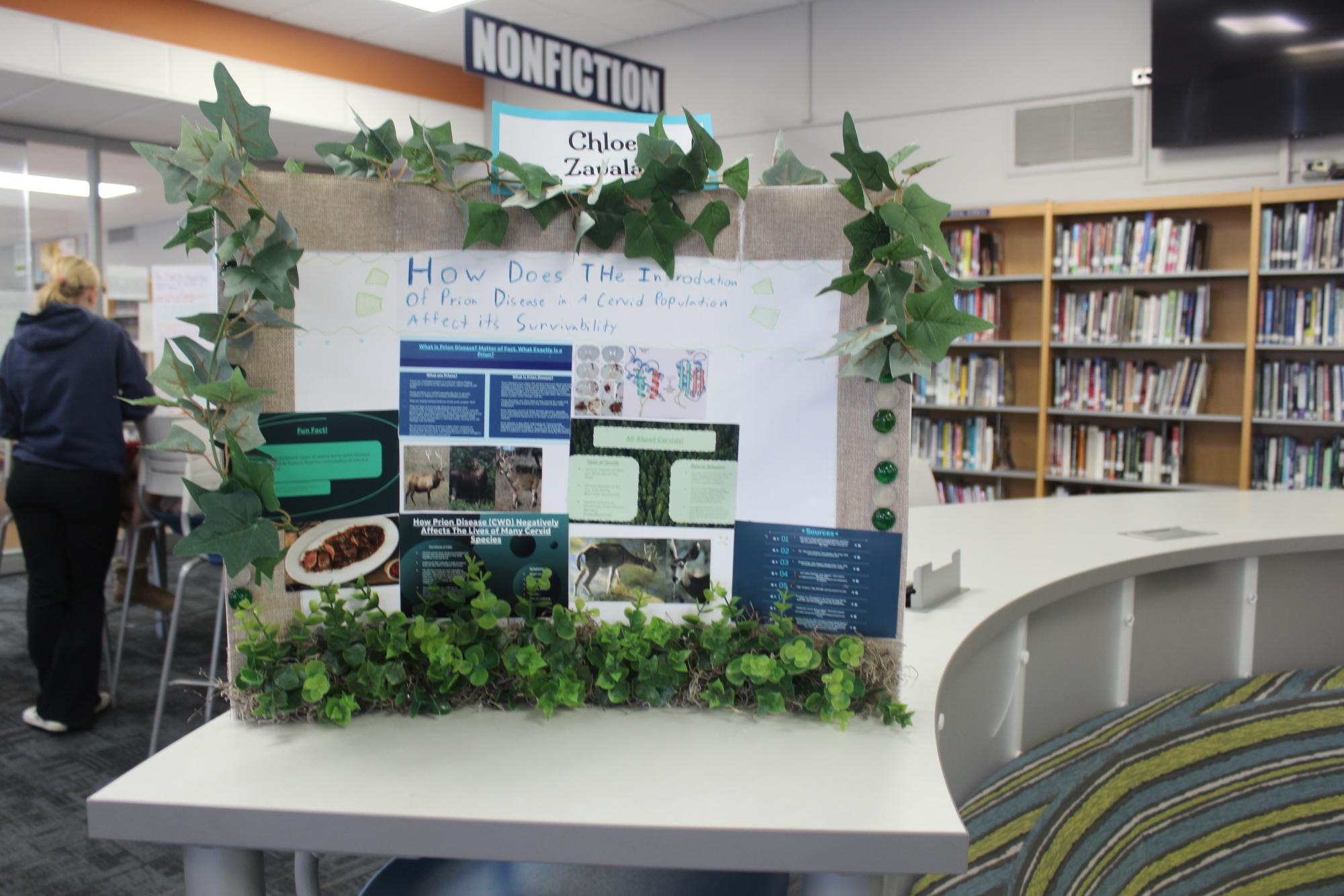
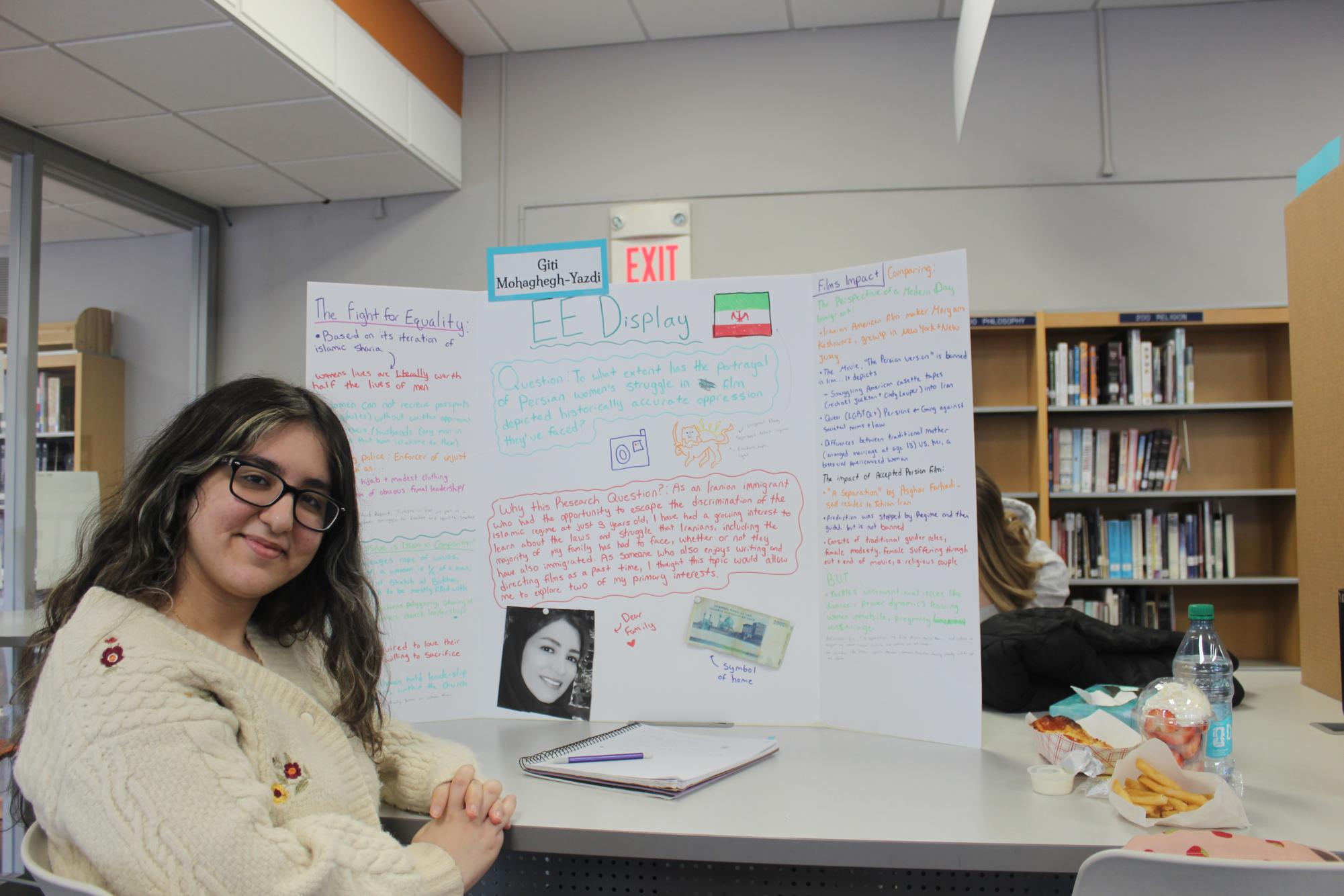
On March 25th, the MK Library was decked with detailed tri-folds, props, music, and lingering curiosity. MK student journalists and staff who attended the fair listened to IB students talk about their topics, motivations, and the EE process.
Mrs. Vertucci illuminates the difficulty in staying focused during the EE, asserting that “In the end, the motivation has to come from within the students.”
“A lot of students get in this mindset that there are certain things that smart kids should be researching,” Vertucci remarked when discussing her role in keeping students motivated. “And I say to them, don’t try to pretend that something else is interesting to you. Find something that is truly interesting to you.”
Clearly, students took this imperative advice to heart. Ranging from history enthusiasts to Bharatnatyam practitioners, each student had a unique topic to share.
When asked why she chose the topic, “How do Studio Ghibli movies express the negative impact war has on humanity through the characters in their movies?” Chanelle Liu expressed her realization that great film is much more than surface-level fairy tales, drawing her to the rabbit hole enveloping the detrimental impact of war.
Similarly, Ananya Ganga’s topic of “To what extent was India’s Space Program self-reliant rather than shaped by Cold War superpower dependency?” stemmed from both a cultural connection and a childhood interest in space exploration.
Current IB seniors reflected on the challenges that came with the EE process, while highlighting their cumulative growth. IB senior Julia Arias Duval’s topic of “Protest music in Argentina during the 1976-1983 military dictatorship” brought the challenge of “the actual analysis and interpretation of the songs [she] chose to write about,” while helping her to “learn not only how to find great sources, but how to organize them.”
Many reinforced this notion, such as senior Nellia Romanova, who “learned invaluable skills about source analysis and cohesive writing.” Senior Isabelle Cumming agreed that “it has definitely strengthened [her] research skills,” while also addressing the self-directed nature of the task, claiming that “writing the EE is hard and [they] don’t get a ton of direction on how exactly to do it.”
The Extended Essay is more than an assignment; it casts a wide umbrella of opportunity that extends beyond high school. Knolls graduate Arnav Madhiwalla explains, “The research process for the EE itself helped me channel my passion into words and visuals, which influenced the course I’m on today.” Vertucci elaborates on the sentiment, noting that “Many of our IB graduates often say that, not just the EE, but other elements of the IB program, really gave them college-like experiences with the support of a high school.”
At its core, the EE fair not only showcased the wide range of interests among IB students at Knolls, but also demonstrated how passion and drive can elevate a “To what extent” question into something far more meaningful.